How many preparations will one bag of coffee make?
Separate theoretical doses, complete preparations and days of supply before deciding which bag size fits your routine.
Updated:
Start with the amount you actually prepare
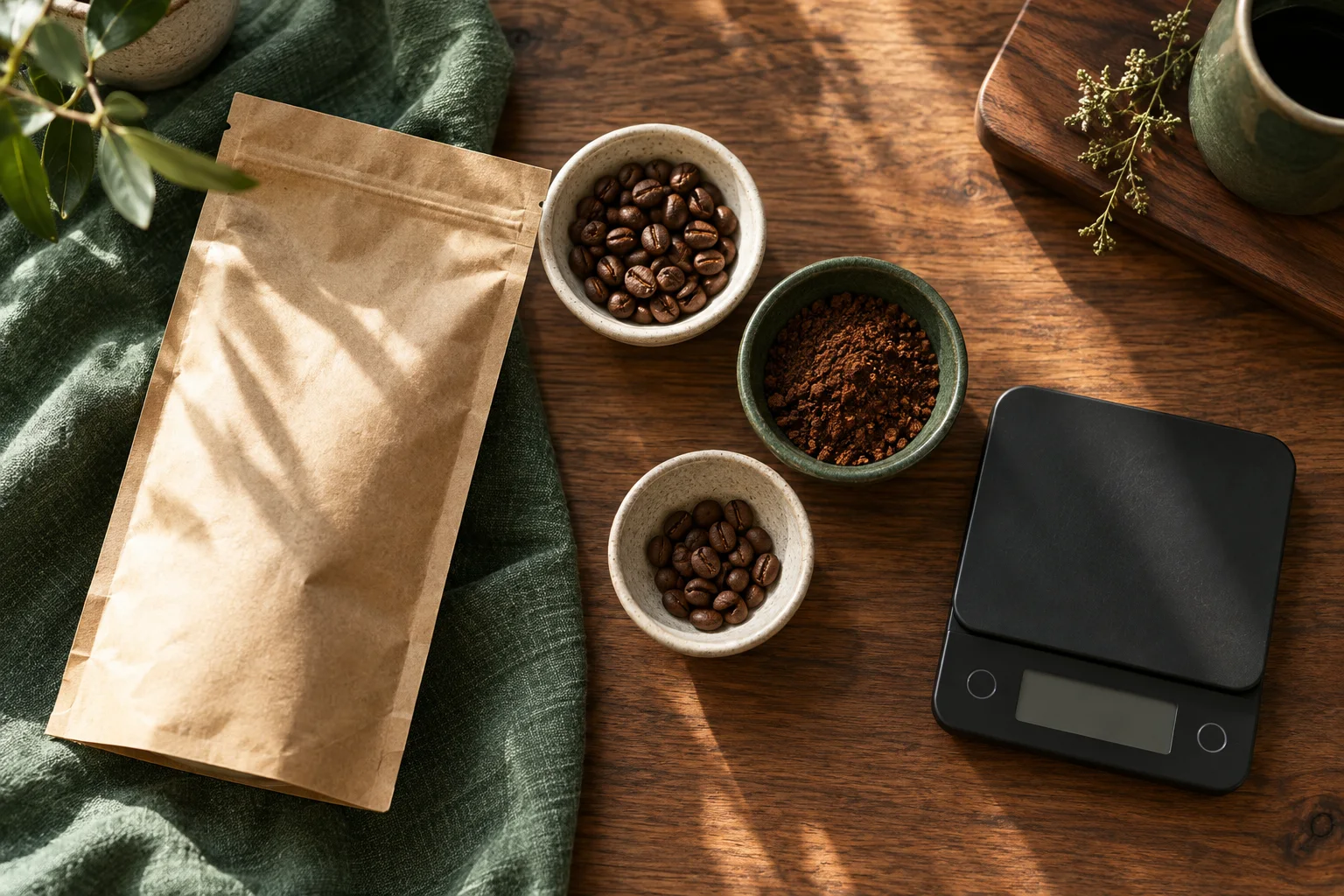
A bag count is an inventory question. It does not tell you how long beans remain enjoyable, how much coffee you should drink or which dose suits your basket. Begin with the net weight printed on the bag and the mass you use for one preparation. If two people use different recipes, write down both. A single average can hide the point at which the bag runs out during a busy week.
For a worked example only, assume a 250 g bag and an 18 g dose. Dividing the bag by the dose gives 13.89 theoretical preparations. In practice, that quantity supports 13 complete preparations, with 16 g remaining, before allowing for any other losses.
Distinguish a complete dose from a fraction
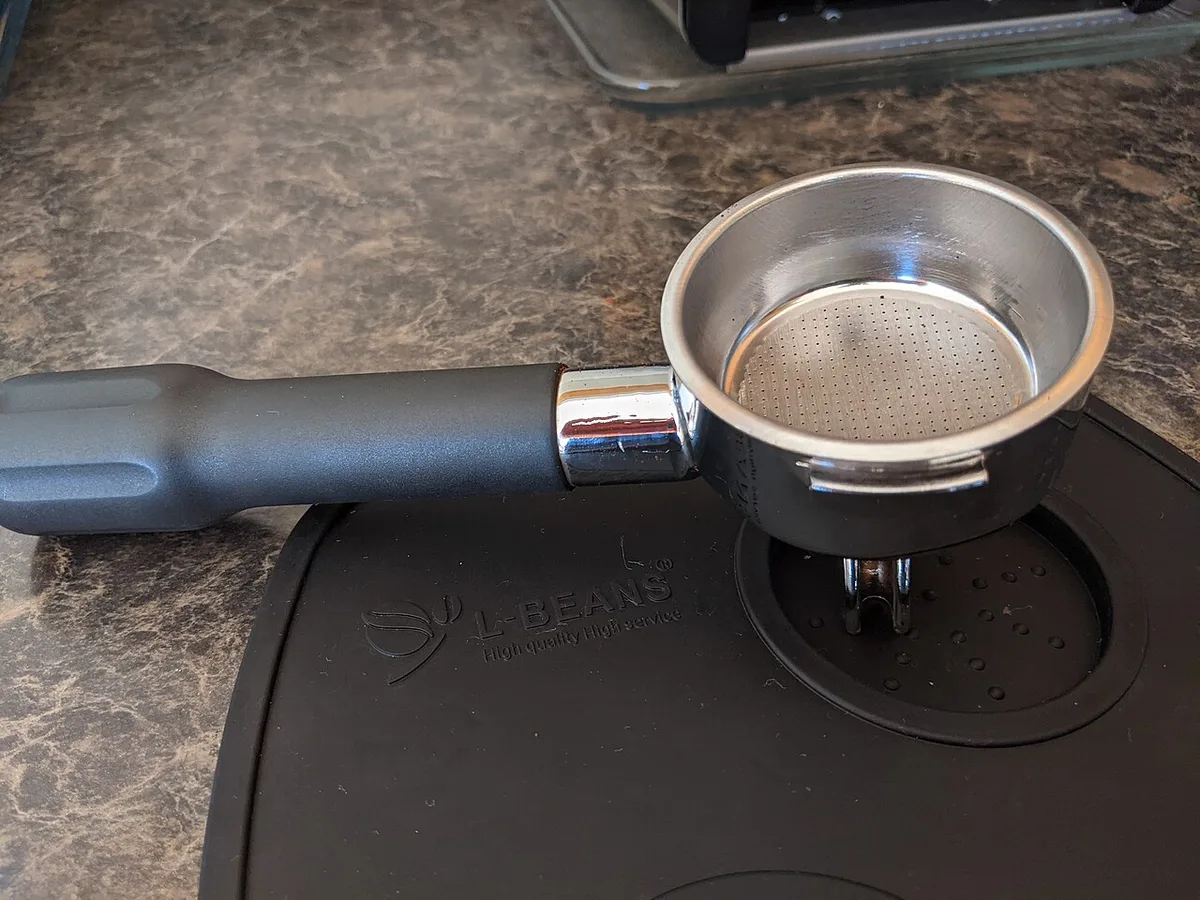
The fractional figure is useful when estimating average cost. It is less useful when you want to know whether there are enough beans for tomorrow morning. Do not round 13.89 up to 14 complete preparations: fourteen doses at the assumed 18 g would require 252 g. The missing 2 g may look small in a spreadsheet, but it means the stated plan exceeds the bag weight.
You could choose a different preparation using the remaining beans if your equipment and recipe allow it, but the arithmetic cannot make that choice for you. Keep the remainder visible. It is a useful prompt to check the cupboard before placing another order.
Include the beans used while adjusting
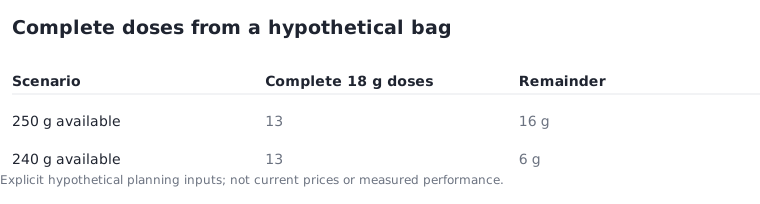
Some beans may be used for adjustments, spilled or prepared in drinks that are not served. There is no universal allowance in this calculation. Record what happens in your own routine. As a deliberately hypothetical scenario, reserve 10 g of the same 250 g bag for unserved use. The remaining 240 g supports 13 complete 18 g preparations and leaves 6 g.
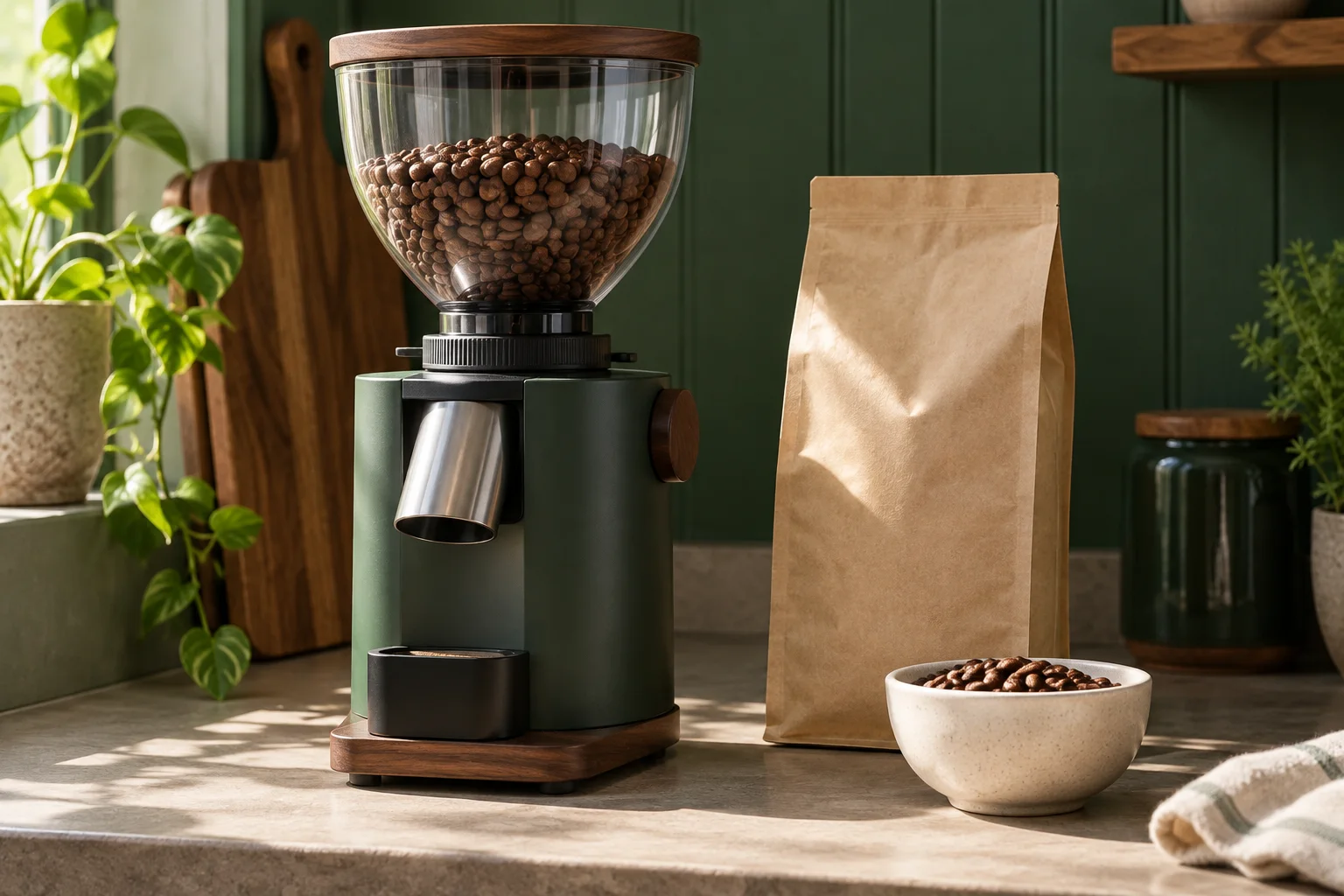
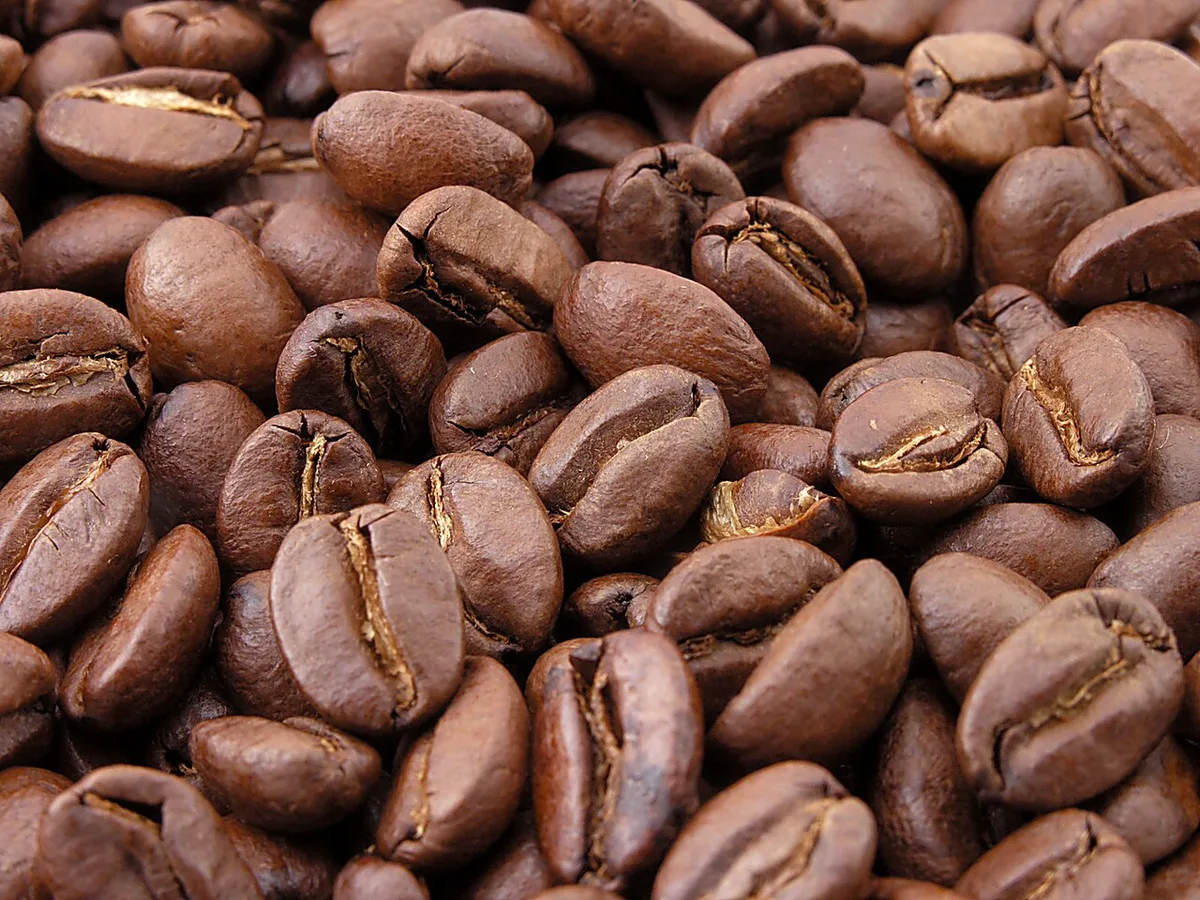
The distinction matters when comparing bag sizes. A larger bag does not remove uncertainty about use, and buying more than you expect to use is not automatically economical. The bean photograph shows the purchased material; it provides no evidence of freshness, roast date or a measured quantity.
Convert the count into a shopping interval
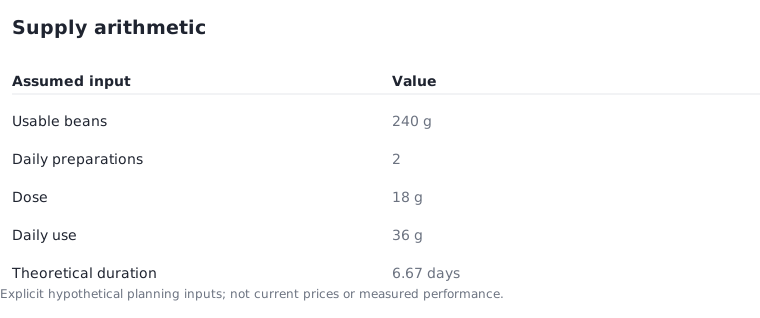
With 240 g available and two assumed 18 g preparations each day, daily use is 36 g. The theoretical supply is 6.67 days. That is an inventory estimate, not an instruction to store coffee for any particular duration. You may prefer to shop before the theoretical endpoint, especially if visitors or a changed work pattern alter your use. Write down the reason for any extra allowance.
A hopper capacity is a different quantity. The Sage BES875/SES875 manual lists a 250 g hopper. It does not turn that capacity into a requirement to pour an entire bag into the machine. Follow the product instructions and your own purchasing plan.
Sage BES875 / SES875 UK instruction manual ?
Keep a record simple enough to repeat
Record the opening date, starting bag mass, usual dose, preparations per day and any unserved amount you measured. Recalculate when the routine changes. If you combine leftovers from several bags, note that separately so that the next purchase comparison is not misleading. A change in household use can explain a faster empty bag without any change in the equipment.
For your next order, ask whether you need the same quantity again, a smaller bag or more frequent purchases. The useful result is a clearly labelled range of supply under your assumptions. It is not a freshness guarantee, a recommendation to consume a fixed number of drinks or evidence that a particular machine wastes less coffee.