Choose a coffee scale by fit, capacity and readable information
Read display resolution separately from accuracy, and include the cup or container when checking the load.
Updated:
Decide where the scale will be used
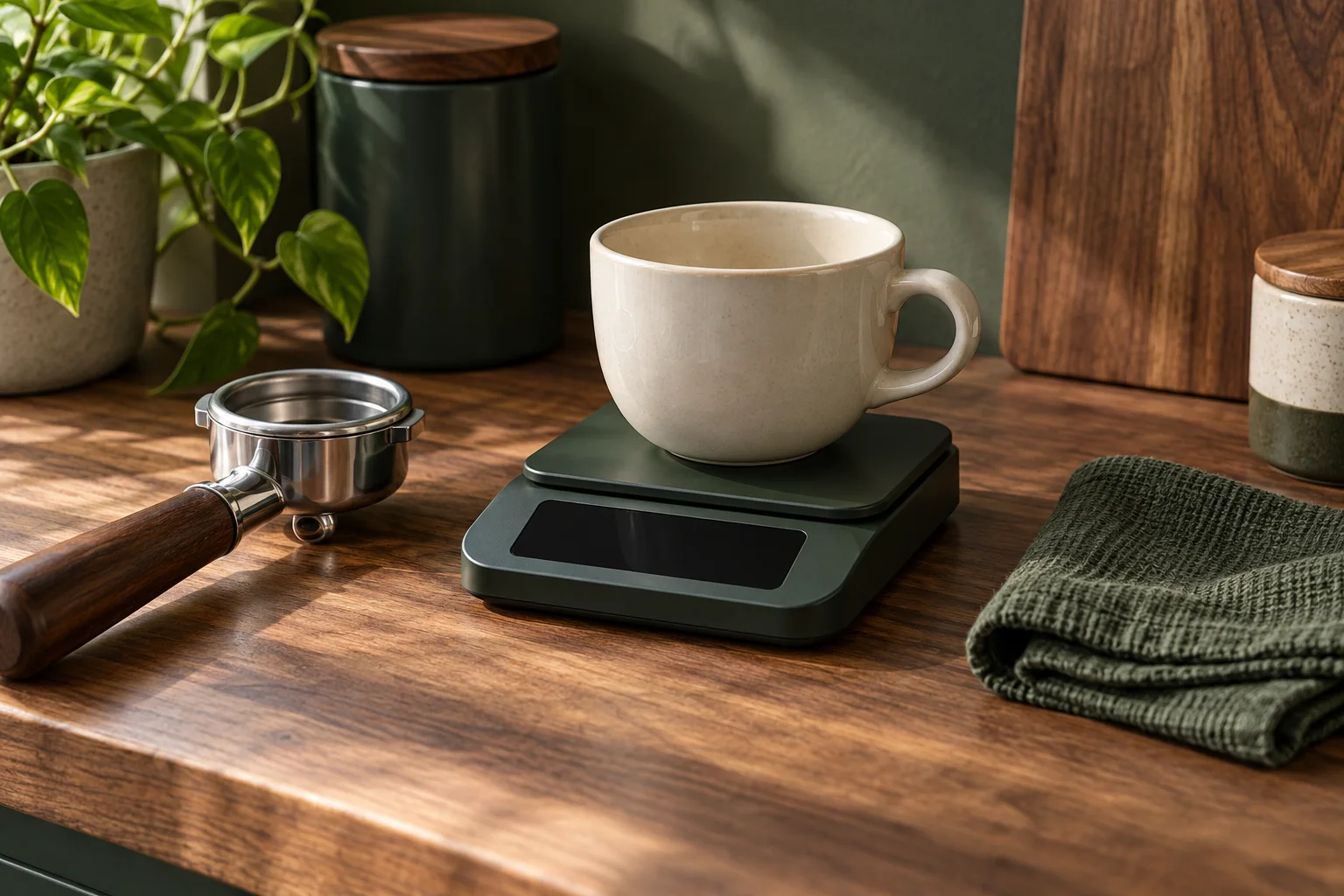
Begin with the task: weighing beans in a bowl, checking grounds in a portafilter or placing a cup under an espresso spout. These positions have different practical constraints. Measure the surface and the available height with the actual cup or container you intend to use. A small scale is only useful if its platform, controls and display remain accessible in that position.
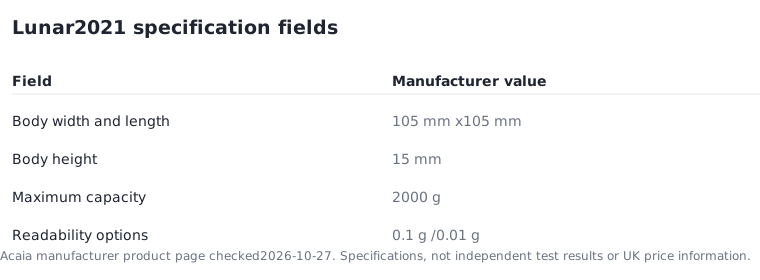
As a product-specific reference, Acaia's Lunar2021 specification lists a 105 mm by105 mm body and15 mm height. That is a manufacturer specification from its US product page, not a UK stock or price claim. Use the exact version's specification when comparing a listing, and confirm its fit independently.
Acaia Lunar2021 manufacturer specification (US page; no UK price claim) ?

Do not confuse an extra digit with accuracy
Display resolution describes the smallest increment shown. Acaia's support explanation explicitly distinguishes this from actual accuracy. A more finely divided display can make a number look more precise without changing the underlying measurement capability. Keep readability, repeatability and any stated accuracy information in separate columns rather than merging them into one general precision score.
The Lunar2021 page lists readability options of0.1 g and0.01 g, with maximum capacity2000 g. These are separate specifications serving different purposes. Do not turn the smaller display increment into a promise that every change of that amount is accurate under every condition.
Acaia: weighing resolution explained ? Acaia Lunar2021 manufacturer specification (US page; no UK price claim) ?
Count the container in the physical load
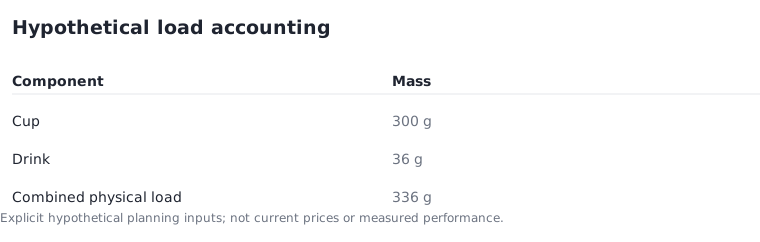
Your cup, bowl or portafilter still sits on the scale even when a tare function makes the display show zero. Check the manufacturer's capacity and operating instructions for the complete arrangement. A hypothetical cup weighing300 g plus36 g of drink creates336 g of physical load. The displayed net drink amount can be different from that combined load.
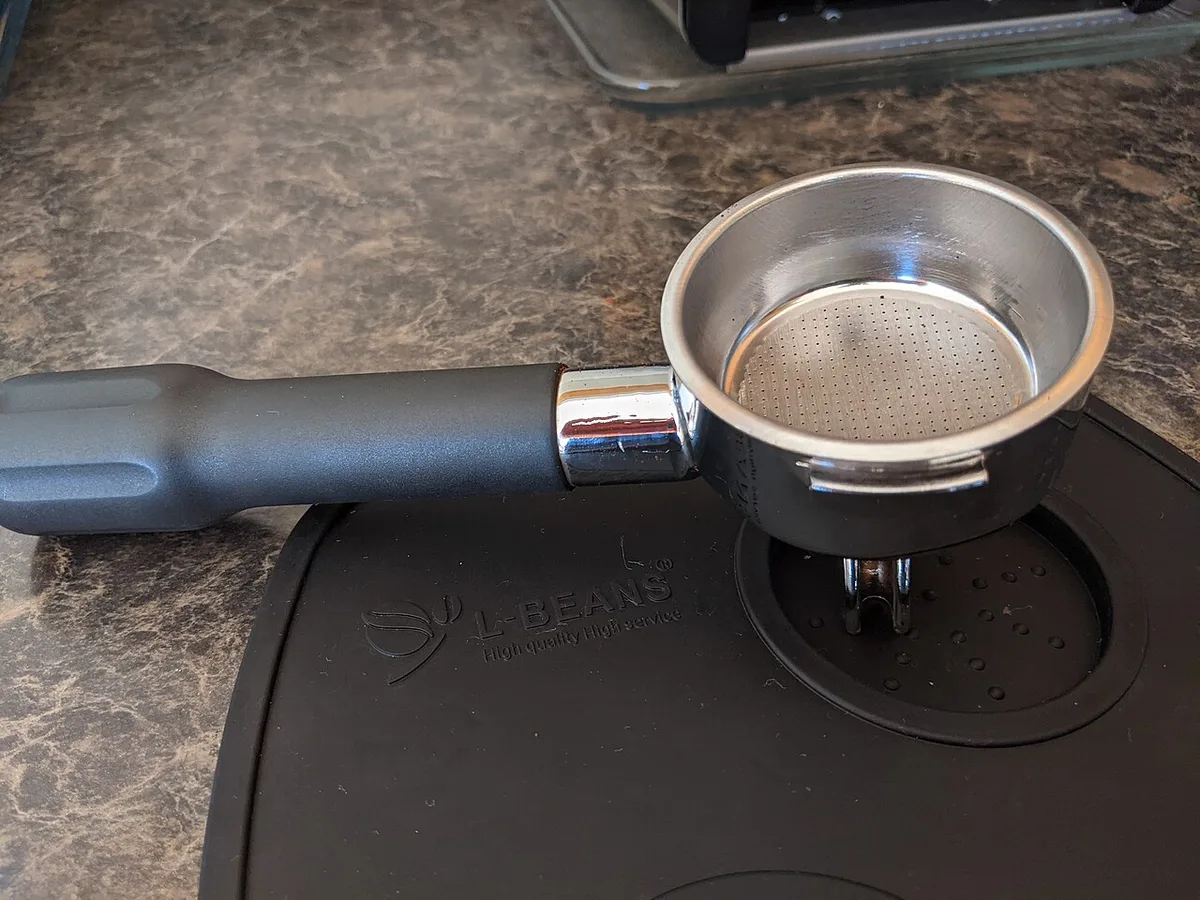
Use a stable arrangement that the manufacturer permits, and avoid relying on a narrow edge or a balancing trick to make an oversized container fit. If the display becomes hidden by the cup or handle, the scale may be inconvenient even though its capacity is ample. An online photograph cannot establish that the setup works on your machine.
Compare everyday operation before optional features
Read how the scale switches on, changes units, tares and handles its timer if provided. Check the power supply and charging instructions, and find the care guidance for spills or cleaning. An automatic mode may be convenient for one routine and confusing for another. You should understand what starts and stops a displayed timer before treating it as part of your record.
Make a shortlist using requirements you can verify: the full setup fits, the display can be read, the required load is supported and the essential controls are understandable. Keep app features or decorative finishes in an optional column so they do not obscure those basic questions.
Keep the buying comparison grounded
When ready to purchase, obtain a current UK quote for the exact version and record what is included. Confirm the seller, delivery cost and support arrangements separately from the manufacturer's technical specification. This guide does not infer UK availability or guarantee conditions from the US page used for dimensional and measurement examples.
After purchase, follow the supplied instructions for setup and any verification or calibration procedure. Do not invent a calibration weight from household objects whose mass you do not know. The practical aim is a scale that fits your routine and supplies understandable readings, with its limitations kept clear. A longer list of digits is only one part of that decision.