Can you reach the water tank comfortably?
A refill and cleaning access checklist for comparing countertop espresso machines before purchase.
Updated:
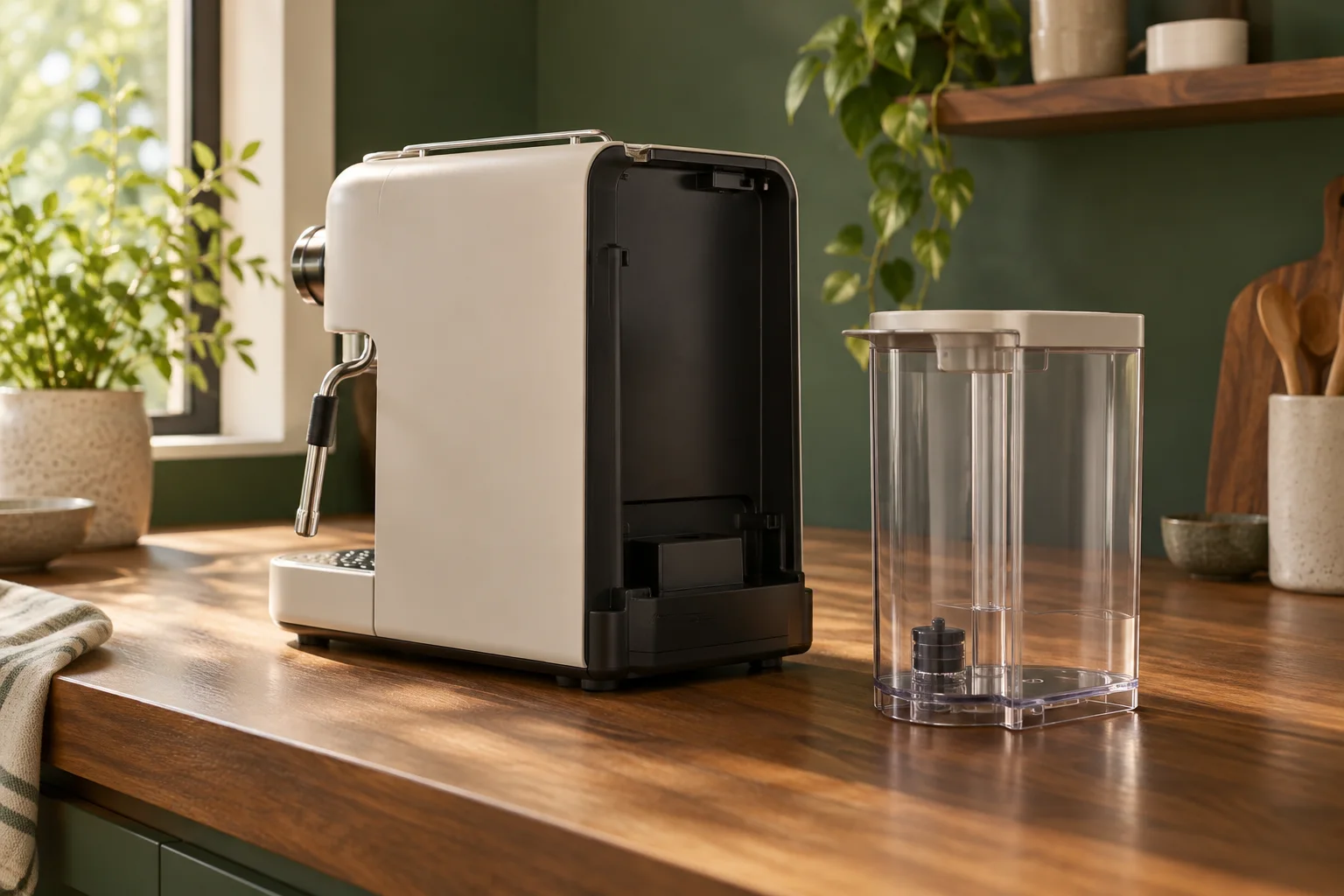
Look for the route, not only the capacity
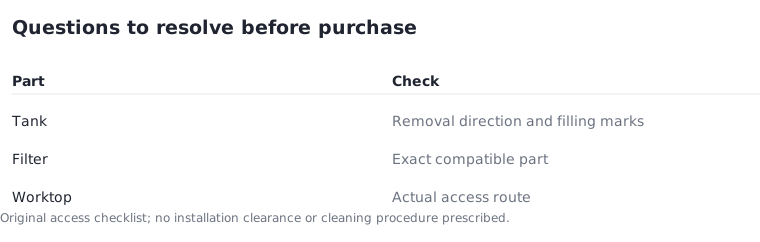
A water tank figure tells you how much the manufacturer says the container holds. It does not show how easily you can remove it, carry it to a sink or return it to the machine. Before buying, look for a drawing or demonstration of the exact tank arrangement. Find out whether access is from above, behind or in front, and whether nearby shelving changes that route.
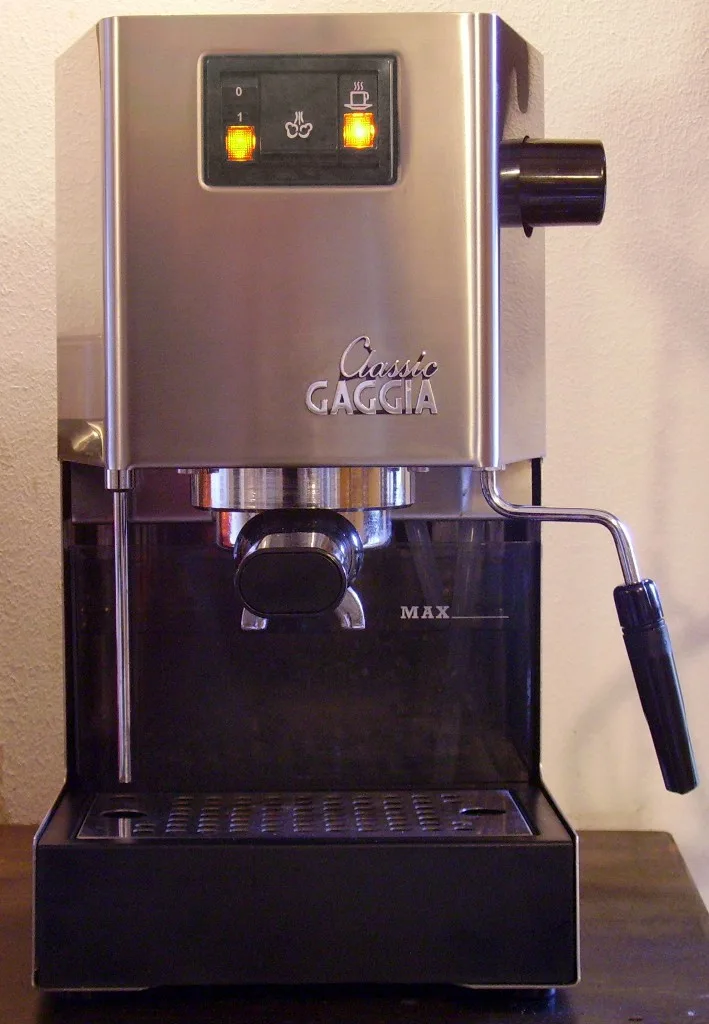
The Sage BES875/SES875 manual describes its tank being returned at the back of the machine. That is a useful example of why body dimensions alone do not answer an access question. The historical Gaggia photograph in this article shows a different arrangement and should not be used to infer the Sage tank route.
Sage BES875 / SES875 UK instruction manual ?
Separate the filled weight from the empty container
Consider the container as something you need to handle, rather than an abstract number on a specification sheet. Check its handle, opening and the way it seats in the appliance. If possible, inspect the same model in a shop without operating it, or ask the seller for a clear view of the tank and its removal path. Do not attempt to lift or move a working hot machine to reach a hidden part.
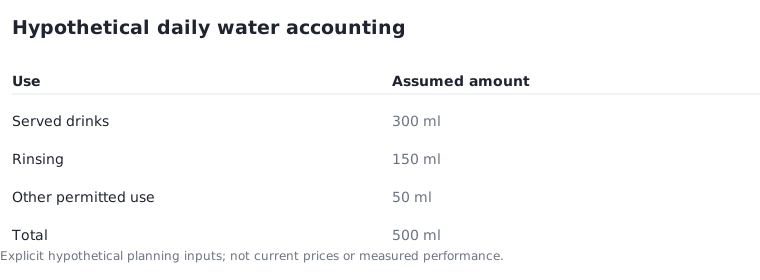
For an illustrative water-use record, imagine 300 ml going into served drinks, 150 ml into rinsing and 50 ml into another permitted routine. The total is 500 ml. These are fictional accounting inputs, not a suggested flushing procedure or instructions for your machine.
Allow for all the water you use
It is tempting to divide a tank capacity by the apparent drink size and call the result a refill interval. That misses any other water used by the appliance or routine. Measure your own total if you want a realistic inventory estimate. Keep drink output, rinsing and other use in separate rows so you can see which assumption changed when the tank empties sooner than expected.
Under the hypothetical 500 ml daily total above, four days would use 2,000 ml. That multiplication is not a claim that a particular tank can safely provide four days of operation. Minimum levels, filling limits and care instructions still govern, and water should not be left in the machine merely to satisfy a spreadsheet estimate.

Check the path to cleaning as well as filling
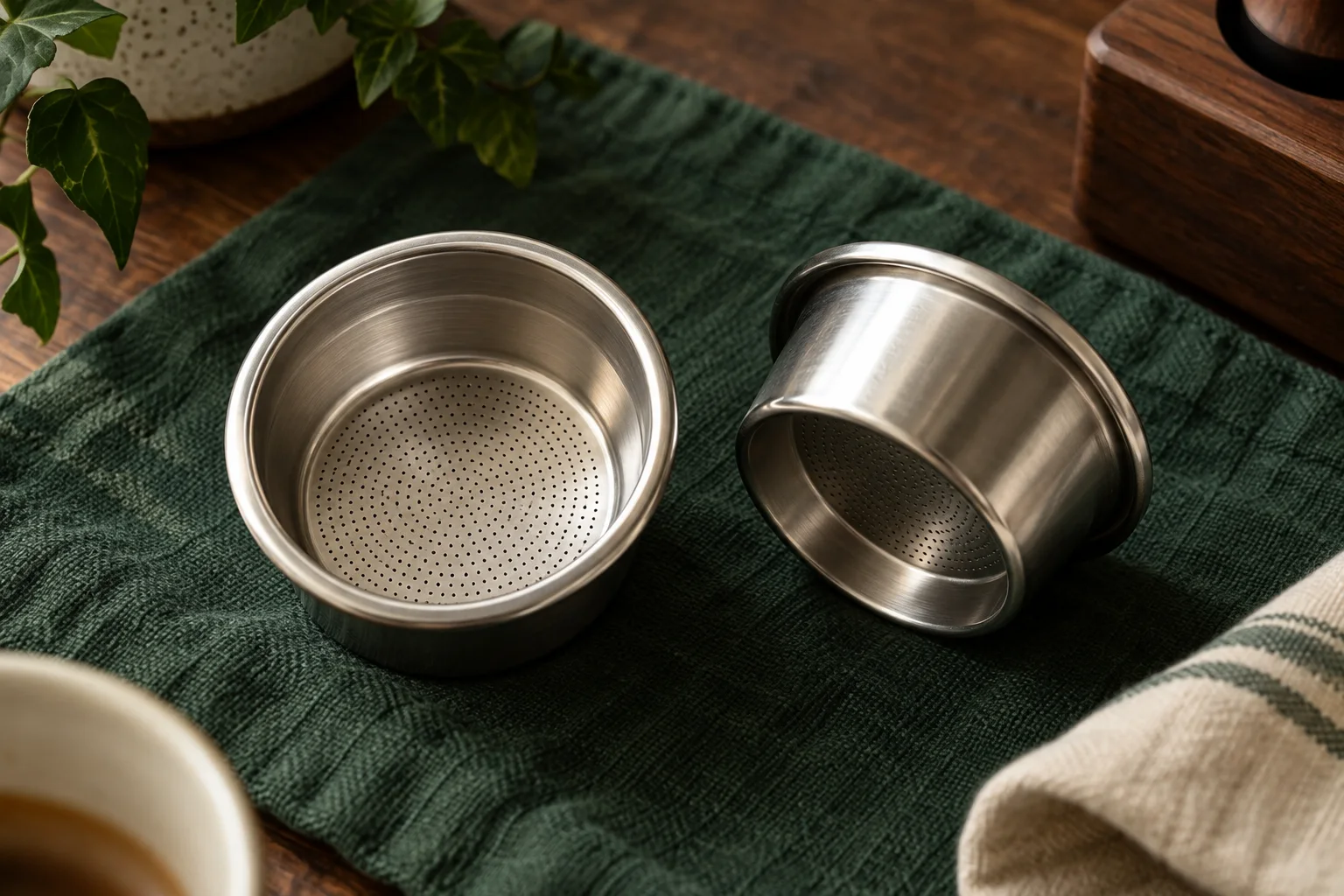
Refilling is only one interaction with the tank. Read the manufacturer's care section and check how the relevant parts are handled, what cleaning materials are allowed and how they are returned. Keep any removable water filter distinct from the tank itself in your notes. A jug filter and a machine cartridge may look similar in a small photograph while having entirely different identities and instructions.
Write a short access checklist: the route is visible, the container can be handled comfortably, the filling mark can be read, and the care instructions are available. If one item remains uncertain, ask a specific question using the full model number rather than assuming that another machine from the same brand works the same way.
Use the comparison to reject an awkward layout
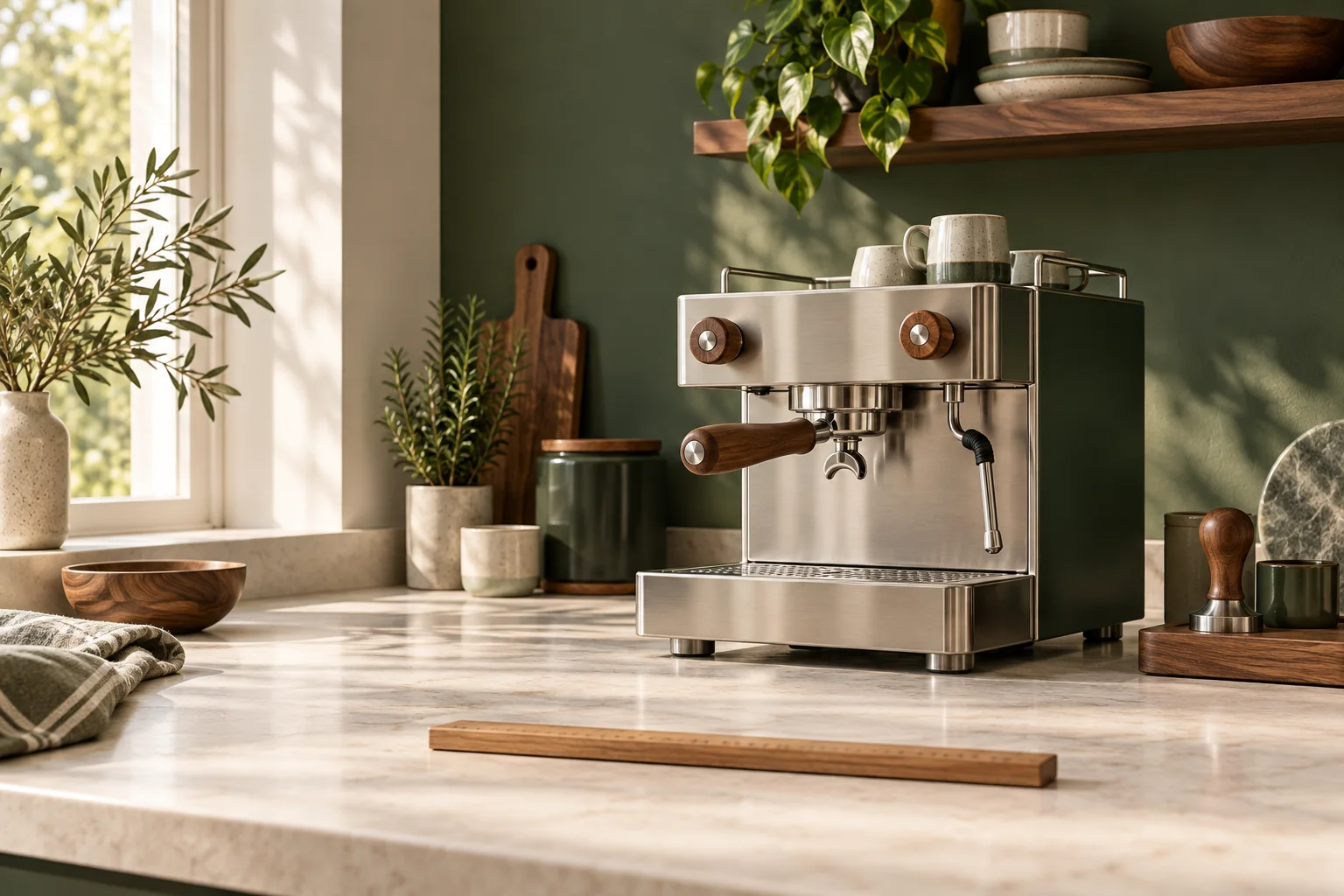
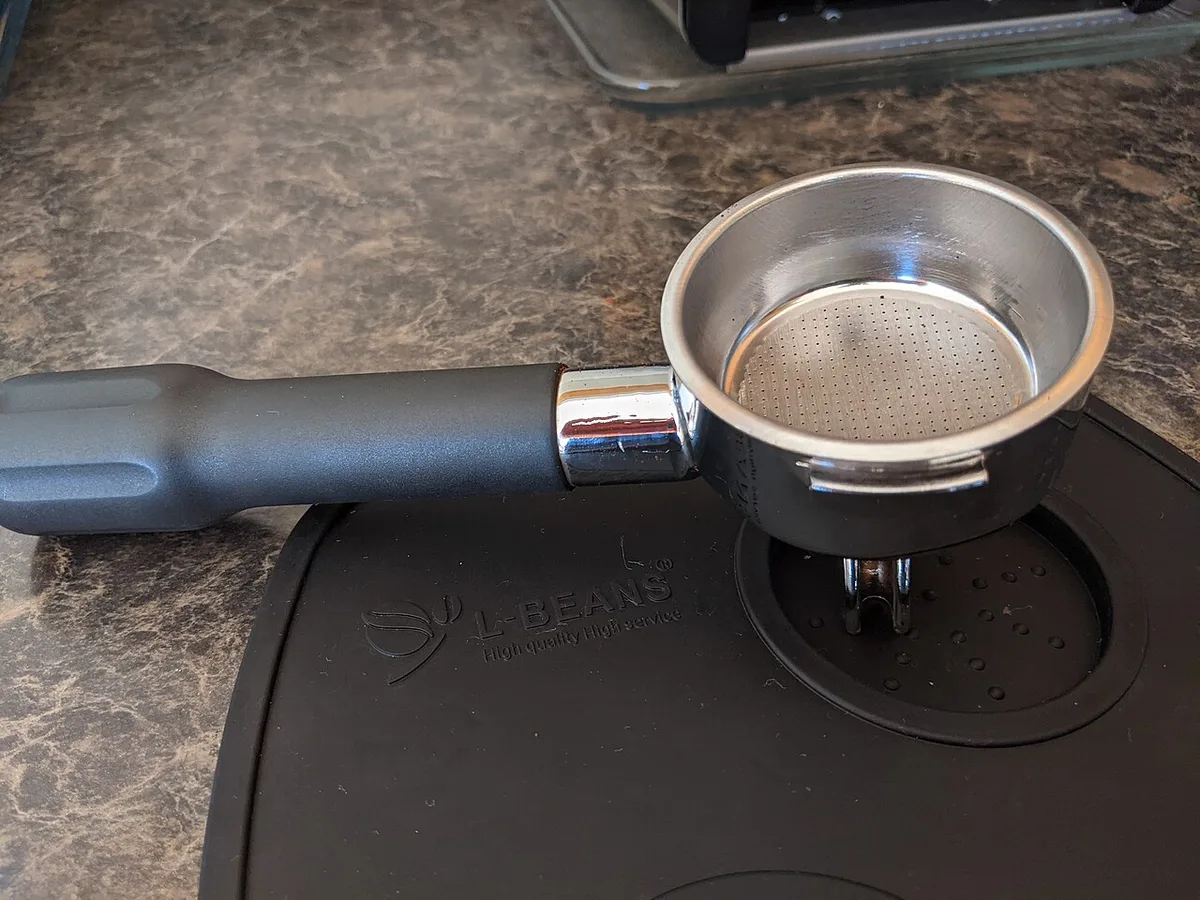
Imagine two hypothetical placements taking 20 cm and 35 cm of additional movement space to reach a removable part. Those are invented planning examples, not required gaps for any product. Draw them separately from the appliance outline and consider whether the movement crosses another appliance or a fragile object. The purpose is to make a practical question visible before money changes hands.
Choose the arrangement you can understand and maintain under the actual instructions. A bigger tank is not automatically a better purchase if the refill route is uncomfortable or the marks are difficult to see. Keep the model-specific answer with your purchase notes so the final kitchen plan includes the routine, not just the machine's exterior.