Single-wall or dual-wall: check the basket before buying extras
Use your exact machine instructions and part identity to choose a basket, rather than treating diameter or appearance as proof of compatibility.
Updated:
Identify the equipment you already own
Before buying another basket, copy the full machine model and identify the baskets supplied with it. A listing that says espresso basket may omit the details needed for a useful comparison. Take a clear photograph of any part marking while the equipment is cool and safely disconnected, then compare it with the manufacturer's parts information. Keep the existing basket until the replacement has been positively identified.
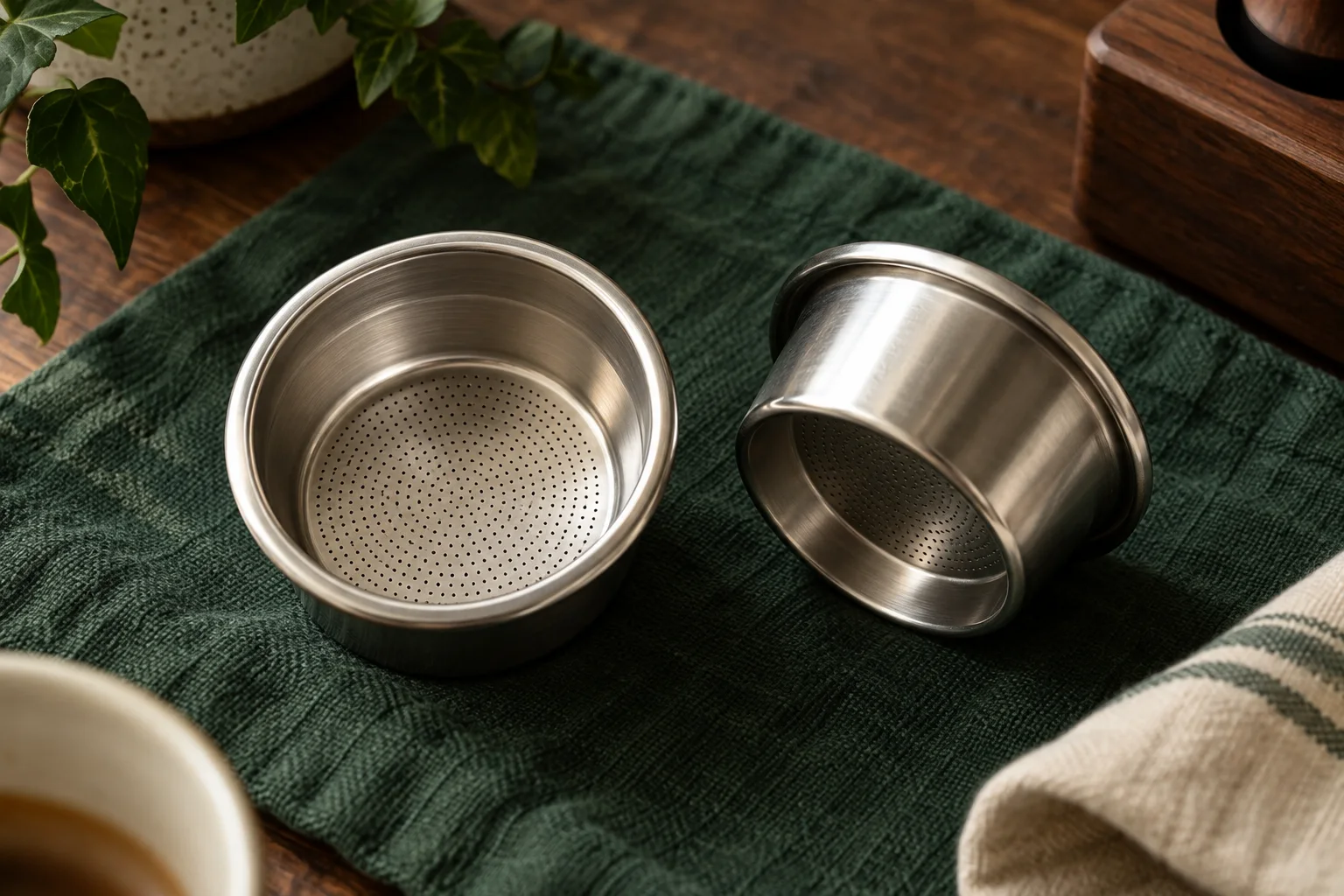
For one specific example, the Sage BES875/SES875 instructions associate single-wall baskets with freshly ground beans and dual-wall baskets with pre-ground coffee. Use that distinction only within the relevant model instructions. It is a starting point for checking your equipment, not a reason to replace a basket that already suits your routine.
Sage BES875 / SES875 UK instruction manual ?
Do not turn a diameter into a compatibility claim
The stated diameter is only one part of the purchase record. The retaining rim, depth, portafilter and intended machine also need to match. A seller's photograph can help you ask a question, but it cannot establish those details by itself. Do not force an uncertain part into place or assume that a visually similar accessory is interchangeable.
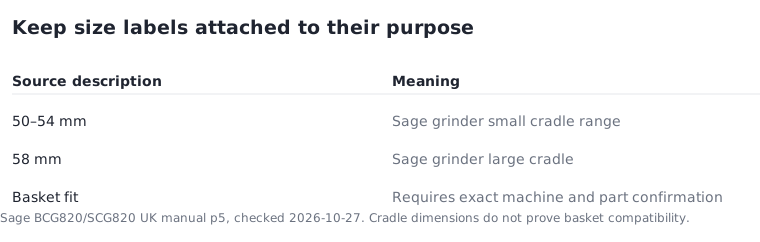
The separate Sage grinder manual lists cradles covering 50–54 mm and 58 mm portafilters. These are cradle descriptions for that grinder; they do not establish a universal basket fitting standard. Keep the purpose of each dimension beside the number when you compare listings, particularly when a product page mixes grinder accessories with machine accessories.
Sage UK BCG820 / SCG820 user guide ?
Write down what changes in your preparation
Your buying decision should begin with the coffee you actually use and the amount of adjustment you want to make. If you regularly buy pre-ground coffee, record that. If you grind whole beans, record the grinder and the basket already in service. Avoid buying an accessory solely because another person's equipment looks similar in a photograph or video.
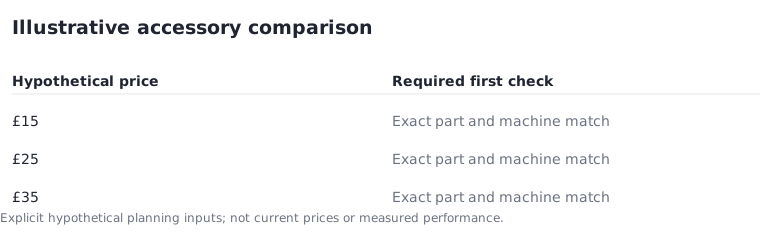
As an illustrative shopping exercise, compare three hypothetical basket prices of £15, £25 and £35. None is a real offer. The difference between the lowest and highest is £20, but an unsuitable £15 basket has no useful saving. Compatibility needs a confirmed answer before price becomes the deciding column.
Check the package, not only the headline
An accessory listing may show several pieces while selling only one. Write down exactly what the seller includes, whether a holder or portafilter is part of the purchase, and which information is still missing. Save the product identifier with the listing date. If a dimension or compatibility statement conflicts with the manufacturer, ask for clarification before ordering rather than selecting the more convenient answer.
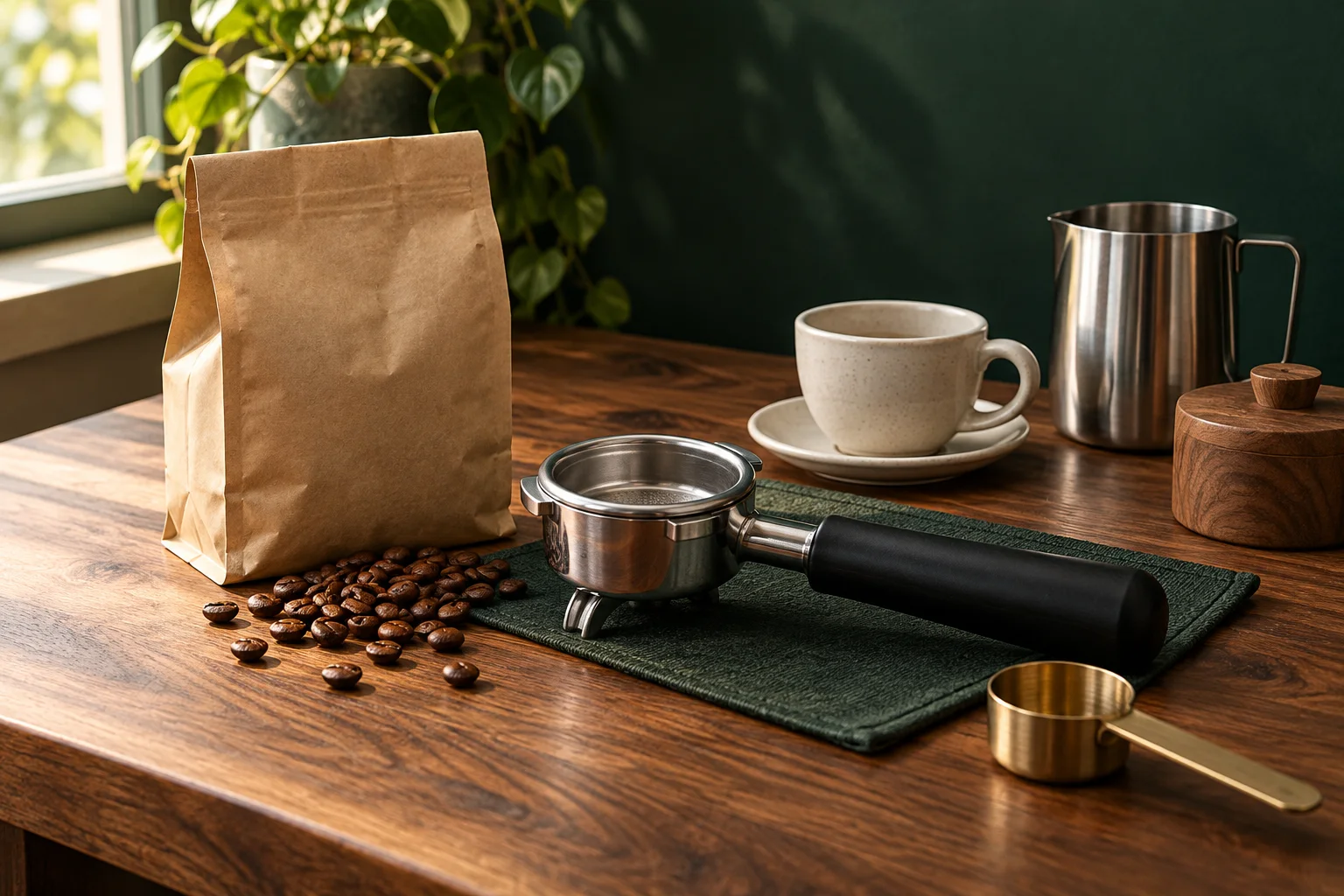
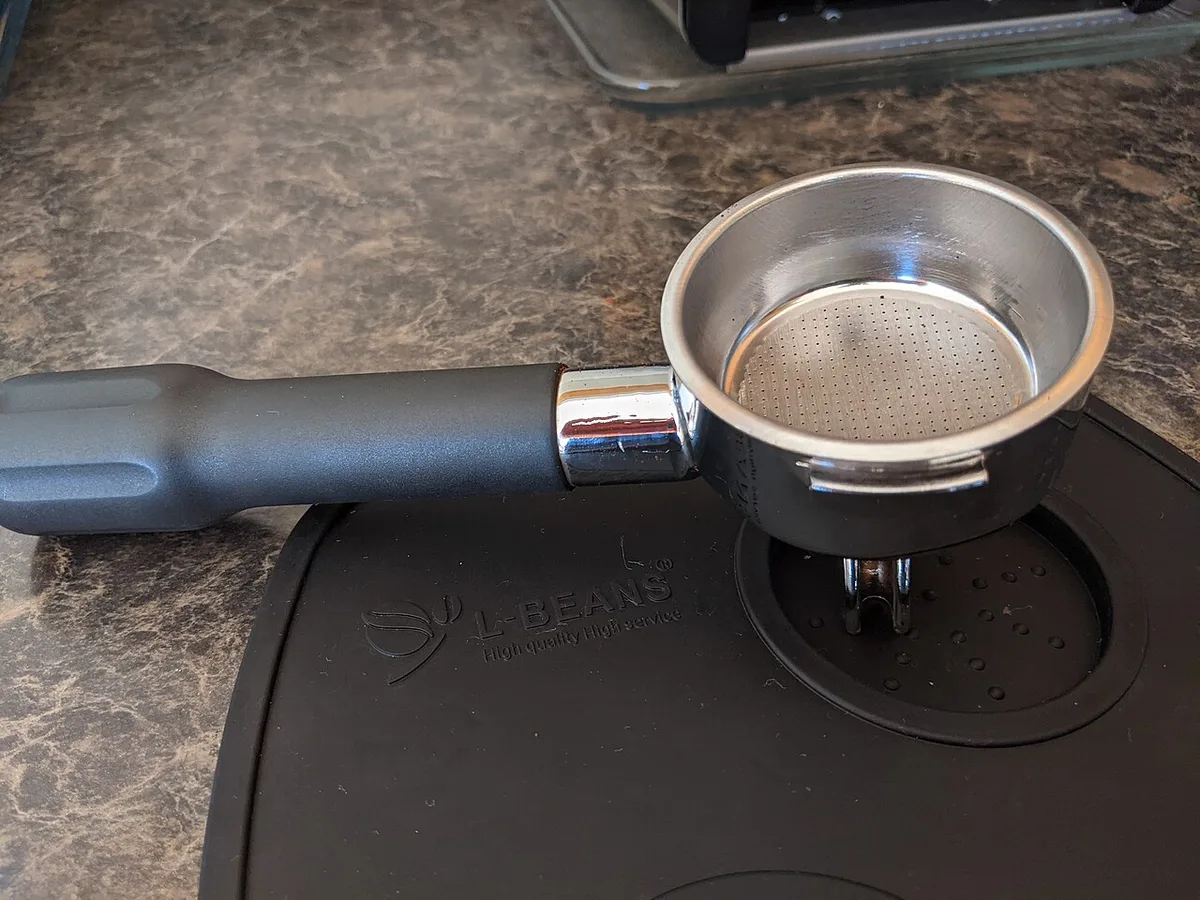
Use a simple comparison sheet with separate fields for machine model, part number, stated size, included components and total delivered cost. Put unresolved entries in a question column. The photographs here show general preparation equipment; none demonstrates the internal construction or suitability of a particular replacement basket.
Make the purchase conditional on a clear match
A useful final check is to explain the replacement in one sentence: this is the identified part for this machine and portafilter, bought for this particular preparation routine. If that sentence depends on an assumption, resolve it first. Keep the invoice and original packaging with the part information so that later maintenance or replacement does not restart the same search.
There is no universal upgrade in this comparison. A basket can be appropriate for one combination of coffee, grinder and machine while being unsuitable for another. Read the relevant operating instructions before use and follow the stated preparation limits. The goal is a supported fit and a routine you understand, not an accessory collection.