Plan filter-jug capacity around the water you actually pour
Separate total vessel size, filtered storage and your refill routine before choosing a jug.
Updated:
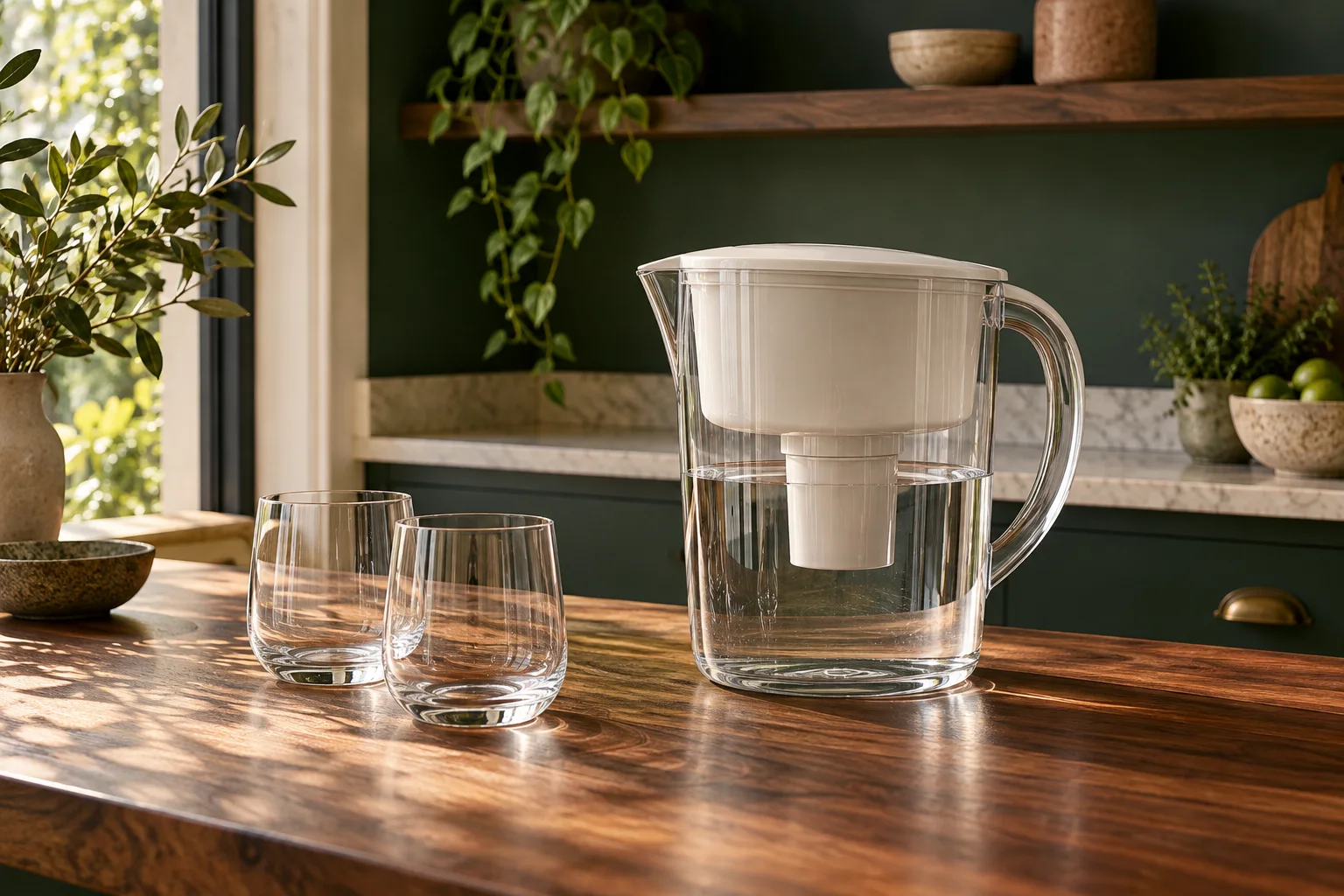
Separate the vessel from the ready-to-pour supply
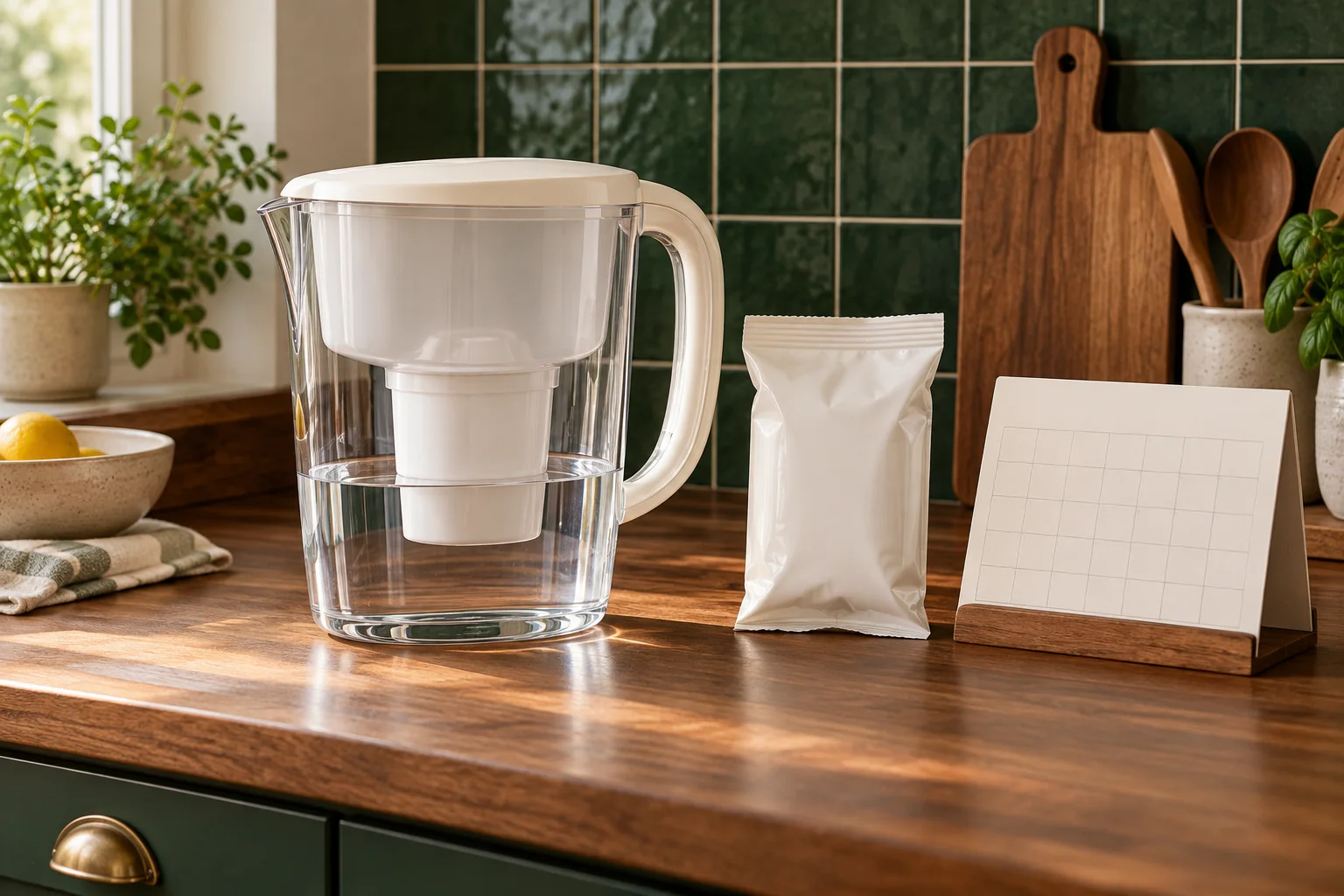
Choose a filter jug by the filtered water available for your routine, not by a large number printed beside its name. Total vessel capacity can include space that is not ready-to-pour filtered storage. Read the exact model description and distinguish the upper filling reservoir from the lower compartment. Keep the lid and pouring arrangement in the comparison as well: a nominal volume alone does not describe how the jug will fit into everyday use.
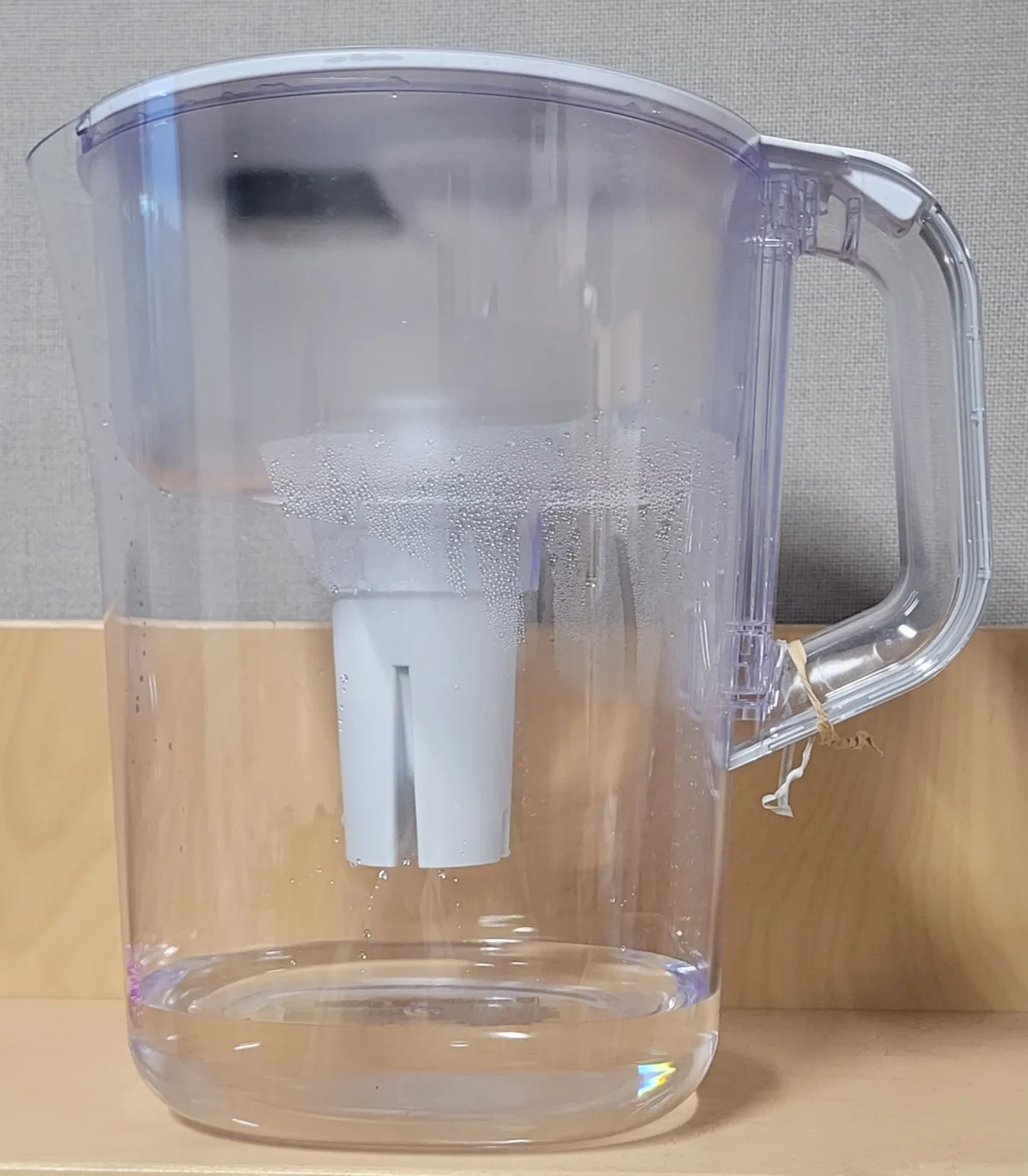
BRITA's UK information distinguishes jug and cartridge details across its product range. This article does not assign one capacity to every model. A historical pitcher photograph makes the two compartments visible, but cannot establish the specification of a current jug.
BRITA UK cartridge questions and answers ?
Translate your serving plan into a volume
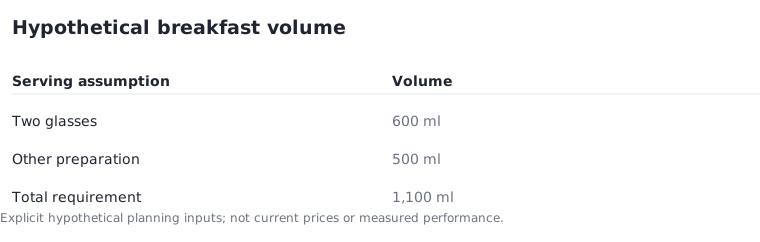
For an explicitly hypothetical breakfast, suppose two people each pour a 300 ml glass and use another 500 ml for their chosen preparation. The total is 300 + 300 + 500 = 1,100 ml, or 1.1 litres. That is a serving requirement, not a claim about any jug. Compare it with the documented filtered capacity of a shortlisted model rather than its total outer volume.
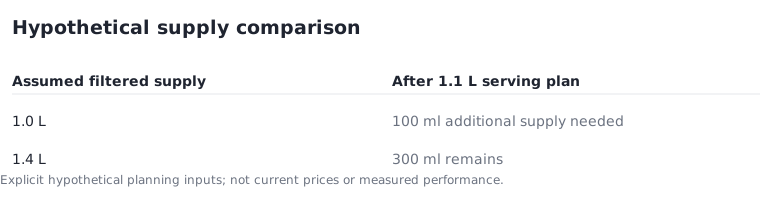
If the documented ready-to-pour volume were an assumed 1 litre, the plan would require another 100 ml beyond that initial supply. At an assumed 1.4 litres, the same plan would leave 300 ml. These examples illustrate arithmetic only; they do not specify refill or filtration times.
Include the refrigerator and the pouring movement
Measure the intended storage space with the actual shelf arrangement in place. Record usable height, depth and the width available around the handle. The lid may require a different movement for filling than for pouring. A jug that physically sits on a shelf can still be awkward to remove, carry or refill in the intended kitchen.
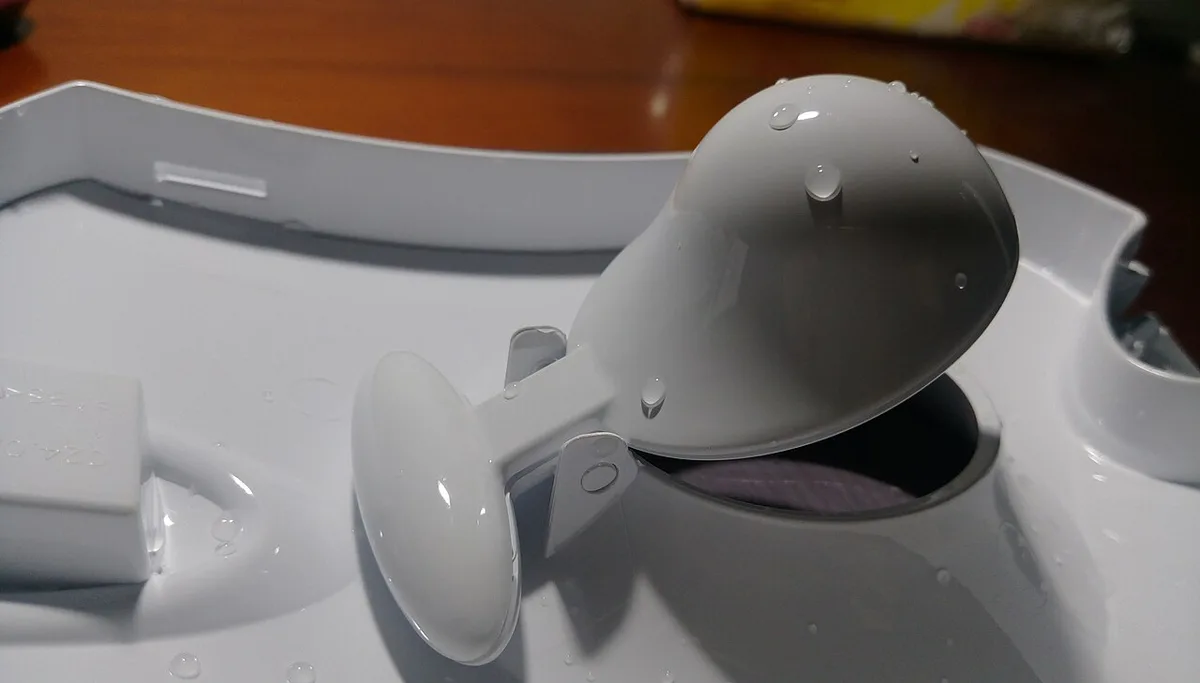
Keep appliance and jug instructions in charge of storage and care. Do not assume that a photograph proves a door-shelf fit or that an indicator can be immersed for cleaning. The historical lid-components photograph shows why the lid deserves its own entry in the comparison, rather than being treated as an invisible part of the vessel.
Keep cartridge life out of the capacity calculation
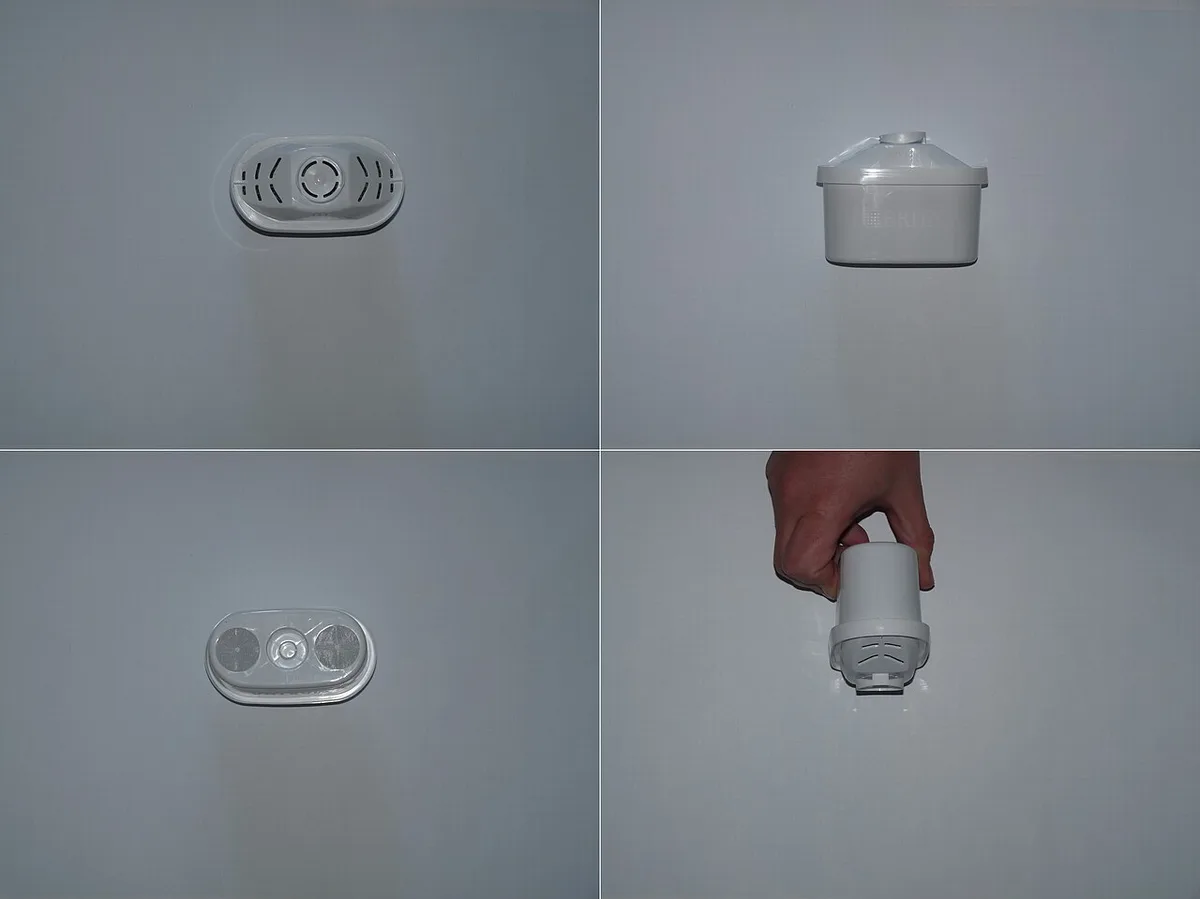
A larger jug does not by itself establish a longer cartridge life. Cartridge type, product conditions and the applicable time or volume limits are separate questions. BRITA's UK cartridge information should be read for the exact replacement you intend to buy. Preserve both the jug model and the cartridge name in your notes so that a future purchase can be checked accurately.
Likewise, counting how many glasses fit in a jug does not measure contaminant reduction or suitability for a particular water supply. This planning exercise answers a storage and serving question. It is not a water-quality test or a reason to extend a replacement interval.
BRITA UK replacement cartridge guidance ?
Make the shortlist answer a practical question
Write one sentence for each candidate: its documented filtered capacity covers the planned serving volume, its dimensions suit the available space, and its filling and care instructions fit the household routine. Leave any unresolved item visible beside the model name. This produces a usable comparison rather than a ranking based on the largest advertised container.
If your serving plan changes, recalculate the volume instead of replacing the whole comparison. Three assumed 300 ml glasses plus 500 ml total 1.4 litres. The extra person changes the serving requirement by 300 ml; it does not change the manufacturer's instructions or the capacity of the jug you already recorded.